Eight tools in CurateSuite's catalog build their product around matching bank transactions to the books, and seven of them assume you already have a ledger. Only Digits replaces QuickBooks outright; Trintech, FloQast, Numeric, DataSnipper, Booke, XBert, and Netgain all sit on top of one, connecting to Xero, QuickBooks, NetSuite, Sage Intacct, MYOB, Zoho Books, or Excel rather than replacing it. That split matters more than any feature comparison, because it means the ledger a firm has already committed to narrows the shortlist before pricing or automation depth even enters the conversation.
This guide sorts the eight by that split, then by the firm size each one is built for, because a mid-market controller running SOX controls and a solo bookkeeper reconciling five QuickBooks files are not shopping in the same aisle even though both search "bank reconciliation software."
The short answer
- Mid-market teams on NetSuite, Sage Intacct, or SAP running a formal close: Trintech (Adra) or FloQast automate transaction matching and balance-sheet reconciliation at volume, both custom-quoted.
- Teams that want reconciliation folded into close task management: Numeric adds auto-reconciliation and AI bank statement parsing on its Growth tier, from $30 per user on Essentials.
- Audit and advisory teams that live in Excel: DataSnipper matches source documents and bank statements to working papers without leaving the spreadsheet.
- Solo bookkeepers and small firms on QuickBooks, Xero, or Zoho Books: Booke reconciles daily for $129 per business per month.
- Practices that want an error-catching layer rather than a full reconciliation platform: XBert flags anomalies and mismatches across Xero, QuickBooks, or MYOB client files from $29 per user plus a per-client data fee.
- NetSuite users with lease and fixed-asset reconciliation on top of cash: Netgain's NetClose module runs natively inside NetSuite.
- Firms open to replacing QuickBooks rather than layering on it: Digits is an AI-native ledger with reconciliation built into the core product, from $65 a month.
The rest of this guide covers how each tool actually works, what it costs, and which firm size and ledger it fits.
What bank reconciliation software actually does
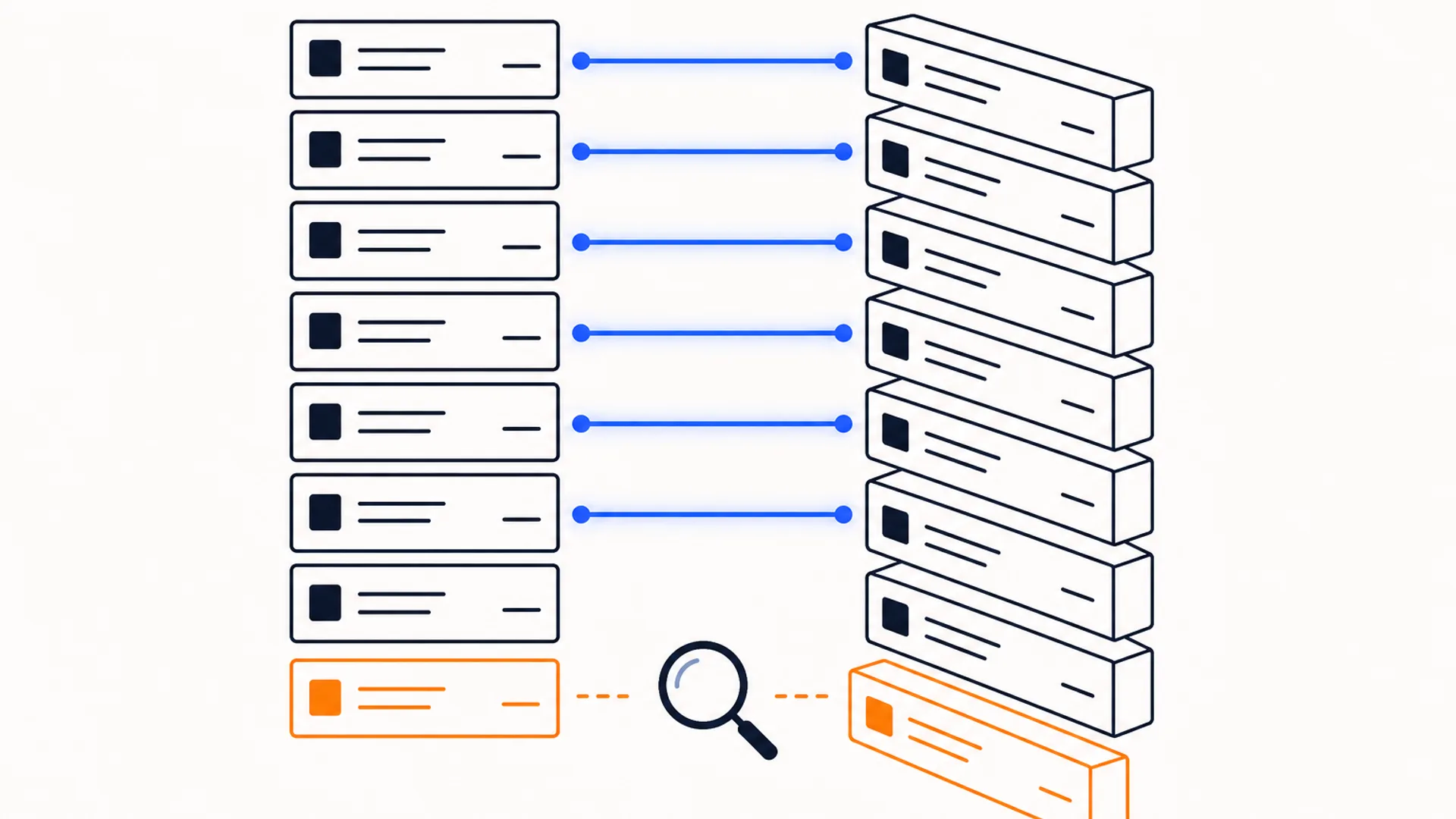
At the core, every tool here does the same job: pull in bank and card transactions, match them against what is already posted in the ledger, and surface the ones that do not match so a human can resolve them. Where they diverge is scope. Some stop there. Others extend into balance-sheet reconciliation, flux analysis, and close task tracking, which starts to overlap with month-end close automation as a whole. If your firm's real bottleneck is the entire close cycle, checklist and reporting pack included, that guide is the better starting point. This one stays with the matching problem specifically: getting the bank feed and the books to agree with the least manual work.
It also does not cover paying vendors. If the gap in your stack is invoices and approvals rather than reconciliation, AP automation software is the separate category, and the two rarely come from the same vendor.
Overlay tool or ledger replacement: the split that decides your options
Seven of the eight tools in this guide are built to sit on top of a ledger you already run. Trintech and FloQast both connect to NetSuite, Sage Intacct, or SAP and add a matching and close layer above them. Numeric does the same for NetSuite, QuickBooks, Xero, and Sage Intacct. Netgain runs natively inside NetSuite, with its standalone lease and asset modules also available on QuickBooks Online. Booke and XBert connect directly to QuickBooks, Xero, Zoho Books, or MYOB and reconcile inside that existing book. DataSnipper works inside Excel against whatever source documents and bank statements you feed it, ledger-agnostic by design.
Digits is the outlier. It is built to replace QuickBooks rather than sync with it, with an Autonomous General Ledger that auto-categorizes and auto-reconciles bank feeds from inside its own platform. That is a bigger decision than picking a reconciliation add-on: it means migrating the books, not bolting a tool onto them.
For a firm that already has clients settled on a ledger, which is nearly every firm with an existing book of business, the overlay group is the realistic shortlist. Digits earns a look only when a client (usually an early-stage US business) is choosing its first ledger and hands-off bookkeeping matters more than staying on QuickBooks.
Bank reconciliation software comparison: pricing and firm fit
| Tool | Pricing model | Starting price | Ledger | Best fit |
|---|---|---|---|---|
| Trintech | Custom quote | Not published | NetSuite, SAP, Oracle, Microsoft Dynamics | Mid-market and enterprise, high transaction volume |
| FloQast | Custom quote | Not published | NetSuite, Sage Intacct, SAP, Xero | Mid-market teams wanting a structured, auditable close |
| Numeric | Per user | $30/user/month (Essentials) | NetSuite, QuickBooks, Xero, Sage Intacct | Teams that want reconciliation inside close task management |
| DataSnipper | Custom quote | Not published | Excel, ledger-agnostic | Audit and advisory teams working from source documents |
| Booke | Per entity | $129/business/month | QuickBooks, Xero, Zoho Books | Solo to mid-sized firms wanting daily reconciliation handled |
| XBert | Per user + per client | $29/user/month + $7/client | Xero, QuickBooks, MYOB, FreeAgent | Firms wanting anomaly alerts across many client files |
| Netgain | Custom quote | Not published | NetSuite (native), any ERP standalone | NetSuite teams reconciling leases and fixed assets alongside cash |
| Digits | Per entity | $65/month (Essentials) | Replaces QuickBooks | US firms open to an AI-native ledger instead of an overlay |
Prices reflect what each vendor publishes as of this writing. Four of the eight, Trintech, FloQast, DataSnipper, and Netgain, quote custom based on volume or entity count, so confirm the current figure on the vendor's own pricing page before committing a client.
Reconciliation tools for mid-market and enterprise close teams
Trintech (Adra)
Trintech runs two products: Adra for mid-market teams and Cadency for large enterprises. Both automate transaction matching, balance-sheet reconciliation, close task management, and intercompany work, aimed at finance teams replacing spreadsheet-driven reconciliation at scale. It connects to NetSuite, SAP, Oracle, and Microsoft Dynamics.
Pricing is custom-quoted and there is no free trial, so budget time for a sales process. Trintech fits a controller who wants transaction matching and close controls in one platform rather than stitching a spreadsheet template to a checklist tool. See Trintech on the vendor site.
FloQast
FloQast is close management built around the month-end cycle: task tracking, automated reconciliations, variance analysis, and journal entry management, with SOX compliance and audit evidence support on its top tier. It connects to NetSuite, Sage Intacct, SAP, and Xero.
Three tiers, Close Optimization, Close Automation, and Connected Compliance and beyond, are all quoted by sales with no published number and no free trial. FloQast suits a mid-market team that wants the reconciliations, the close checklist, and the audit trail in one place rather than three separate tools.
Numeric
Numeric runs the close in one workspace with preparer and reviewer roles split apart, so a controller can see who owns each reconciliation and whether it has been reviewed. Auto-reconciliation against the ledger and AI bank statement parsing sit on the Growth tier, above the $30-per-user Essentials tier that covers task management and the AI technical accounting assistant. It works with NetSuite, QuickBooks Online, Xero, and Sage Intacct.
Numeric is the pick when reconciliation is one piece of a close process you also want tracked and reviewed, not a standalone matching tool.
Netgain
Netgain is built by former auditors and runs natively inside NetSuite, with NetClose handling reconciliations and flux analysis alongside NetLease for ASC 842 and IFRS 16 lease accounting and NetAsset for fixed assets. Standalone versions of the lease and asset modules work on any ERP without NetSuite.
Pricing is custom, quoted by volume, though a free trial and a free tier are both available to test the module set. Netgain earns its place specifically for NetSuite clients whose reconciliation work includes lease schedules and asset registers, not just cash. See Netgain on the vendor site.