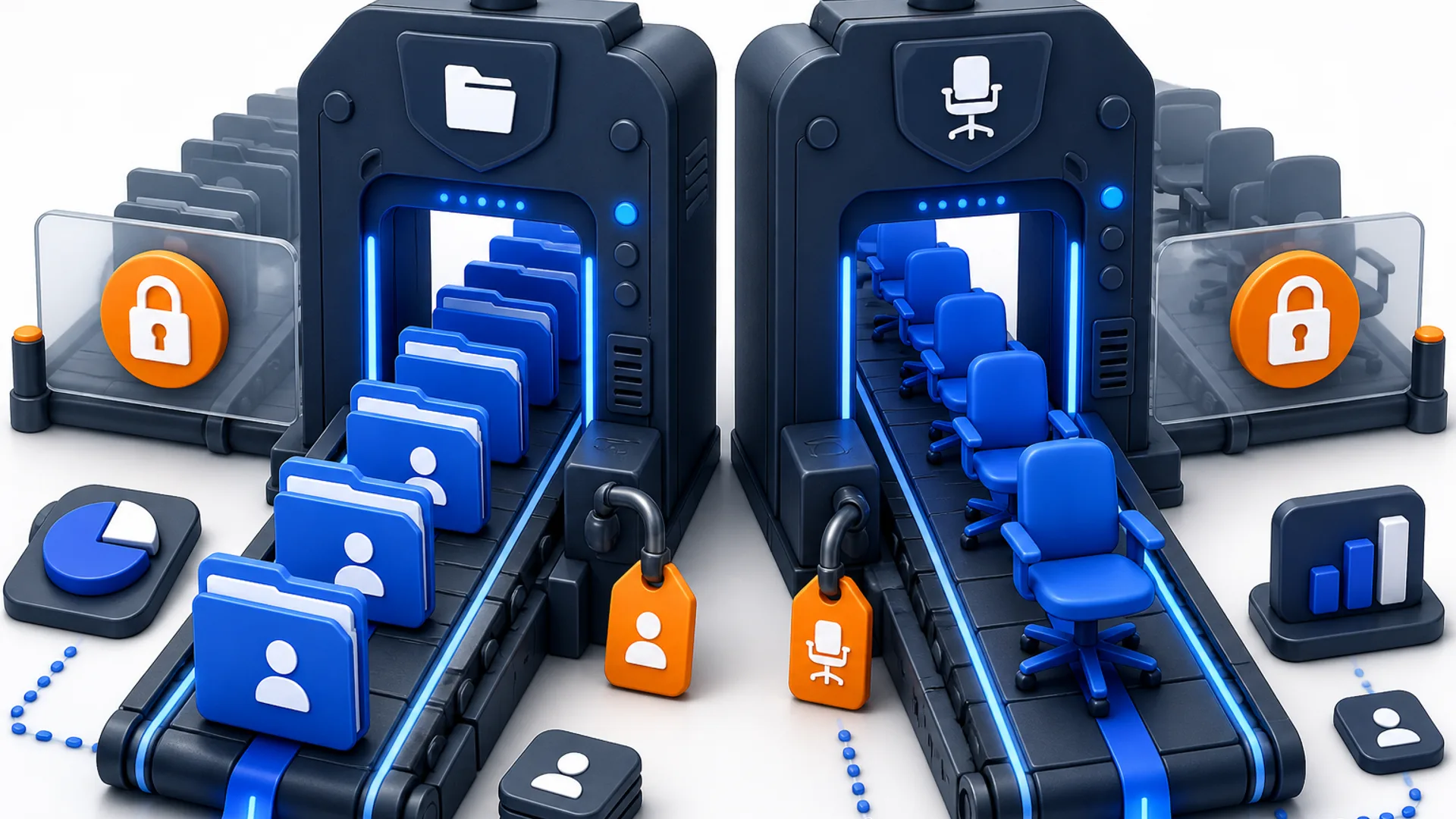
Eleven tools in CurateSuite's catalog automate accounts payable in some form, and they price the work eleven different ways stacked into five distinct models. Only one, BILL, charges per user. Four, Stampli, Dokka, Numra, and Vic.ai, publish no price at all and quote by invoice volume once you get on a call. The rest split between a flat unlimited-user subscription, a free plan funded by card interchange, and a tier that scales with how many invoices pass through each month. None of that shows up on the marketing page, and it matters more than the feature list, because the pricing model decides whether growing your practice raises the bill or leaves it flat.
That distinction is the one a multi-client accounting practice actually needs before signing anything. A firm adding a fourth bookkeeper pays nothing extra on Tipalti's unlimited-user plan and pays for another seat on BILL. A firm running one high-volume client and a dozen quiet ones gets a very different answer from Glean.ai's invoice-tiered pricing than from Routable's flat $1,250 a month. Bill capture, approval routing, and ledger sync are close to table stakes across this category now; the model behind the number on the invoice is where the real difference sits. Document capture and bank feed categorization are two of the other buckets where bookkeeping time goes; the full time breakdown across a working firm covers where AP fits alongside them.
The short answer
- Solo bookkeepers and small clients on a budget: Melio has a genuine free tier (one user, five ACH payments a month) for the smallest clients, and its $25 Core plan adds approval workflows and 1099 automation.
- Multi-client firms on QuickBooks, Xero, NetSuite, or Sage Intacct: BILL has the deepest accountant partner program and wholesale client pricing, at $49 to $89 per user per month.
- Firms that want AP folded into a free card and expense platform: Ramp bundles bill pay with corporate cards at no monthly cost, funded by interchange rather than a subscription.
- Clients on NetSuite, Sage Intacct, or SAP that need approval-flow depth: Stampli keeps every approval conversation attached to the bill itself, custom-quoted by volume.
- Clients paying vendors across multiple countries: Tipalti starts at $99 a month for core AP automation with unlimited users; the 200-plus country, 50-plus payment method, and W-8 tax form coverage sits on the custom-quoted Advanced tier above it.
- Construction, manufacturing, or wholesale clients with heavy line-item bills: MakersHub captures up to 39 data fields per bill, including job and cost codes, from $99 a month flat.
The rest of this guide breaks down how each pricing model actually works, compares all eleven tools on a single table, and groups them by the client mix each one fits.
What AP automation software actually does
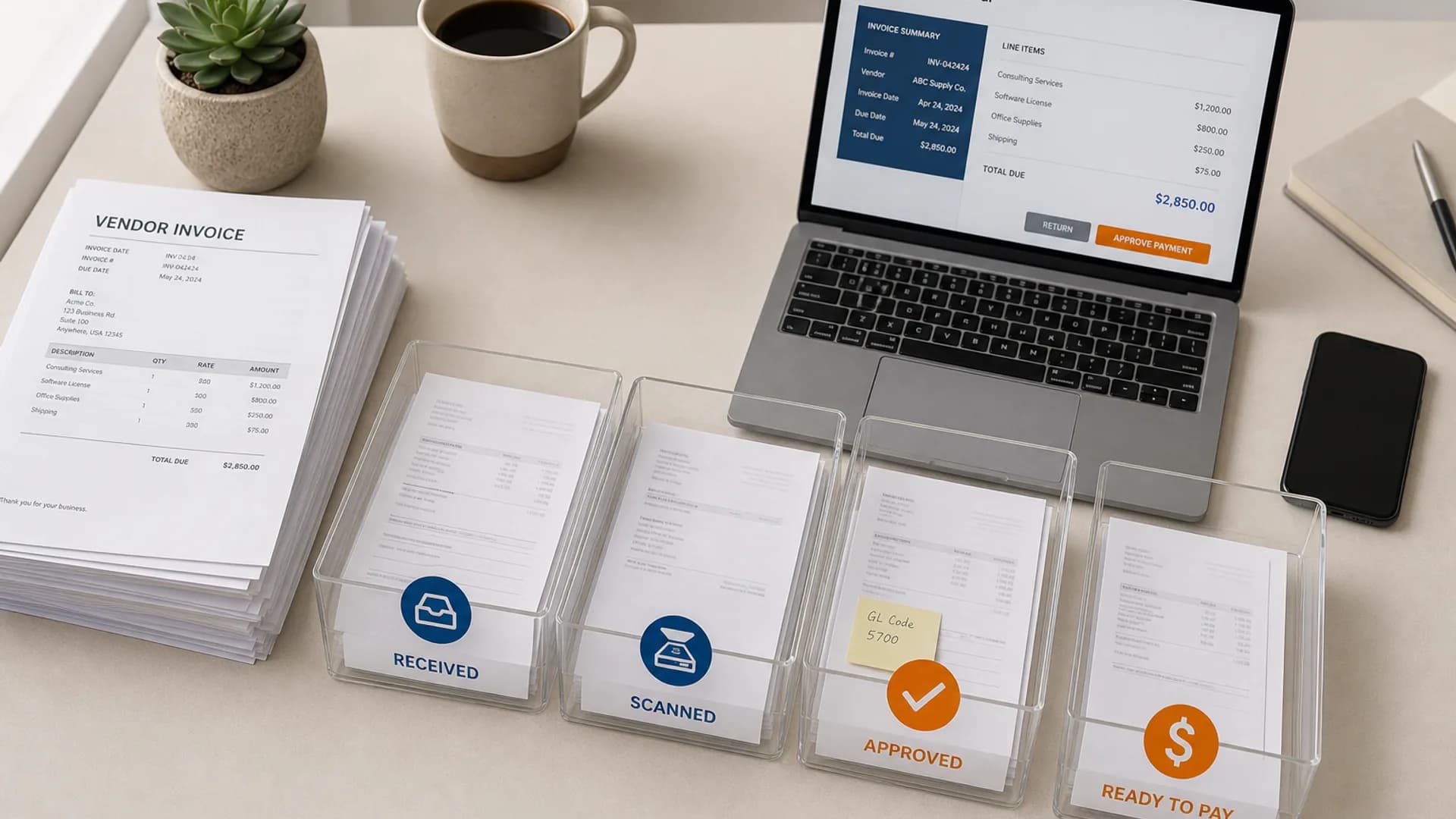
Every tool in this category runs the same three-step pipeline: capture the vendor bill (from an inbox, a supplier portal, or a scan), route it through an approval chain, and pay the vendor by ACH, card, wire, or check, with the transaction posting back to the ledger automatically. Where they diverge is depth: some stop at capture and approval and lean on the accounting software for the rest, others add purchase-order matching, multi-entity handling, supplier tax form collection, or spend analysis on top of the base loop.
That base loop overlaps with document capture, which is its own category with its own pricing quirks. If a client's real bottleneck is reading messy receipts rather than routing and paying bills, the OCR and document capture comparison is the more useful starting point. This guide assumes the capture step is settled and focuses on what happens after a bill lands in the queue: approval, payment, and the accounting sync, which is CurateSuite's AP, AR, and payments category as a whole.
AP automation software comparison: how the pricing actually works
Per user: BILL
BILL is the only tool in this set that charges strictly per user, from $49 a month on Essentials up to $89 on Corporate, with per-payment fees on top ($0.59 for ACH, $1.99 for a mailed check). That structure rewards a lean team working a large client roster and penalizes a firm that adds approvers or reviewers faster than it adds clients. The accountant partner program softens this with wholesale pricing, 10 to 20 percent off based on volume, but the per-seat math still applies underneath.
Flat monthly, unlimited users: Melio, Tipalti, MakersHub, Routable
Four tools charge a flat monthly rate with no per-seat penalty once you clear the entry tier. Tipalti starts at $99 a month with unlimited users on its Select plan. MakersHub is $99 a month flat. Routable is $1,250 a month with unlimited users and up to 1,000 vendors built in. Melio is a hybrid: Core and Boost add $10 per extra user, but the $80 Unlimited plan drops per-user fees entirely. For a firm where headcount grows independently of client count, this group is the one where adding staff does not move the bill.
Free, funded by card interchange: Ramp
Ramp is free at the base tier because the company earns from card interchange rather than subscriptions. Corporate cards, expense coding, and basic bill pay all sit on that free plan, with a $15-per-user Plus tier layered on for AI-driven expense review and deeper ERP connections. It is the only tool here where the sticker price genuinely is zero, not a low number that grows with usage.
Per invoice, tiered by volume: Glean.ai
Glean.ai prices by invoice volume rather than seats or a flat fee: its Basic plan is $295 a month, billed annually, covering up to 35 invoices a month, with higher tiers unlocked as volume climbs. That model tracks the actual AP workload directly, which makes it predictable for a firm with a steady invoice count and expensive for one whose volume spikes seasonally.
Custom quote, no public number: Stampli, Dokka, Numra, Vic.ai
Four of the eleven tools publish nothing. Stampli quotes by bill volume and user count. Dokka and Vic.ai both quote custom based on invoice volume and ERP scope. Numra prices per AI agent on an annual license, quoted once the specific workflows are scoped. None of the four offer a free trial, so the only way to compare them against the tools with a public number is to get on a call with each one.
AP automation software comparison: pricing and fit at a glance
| Tool | Pricing model | Starting price | Best fit |
|---|
| BILL | Per user | $49/user/month | Multi-client US firms on QuickBooks, Xero, NetSuite, or Sage Intacct |
| Melio | Flat, hybrid per-user at lower tiers | Free (Go tier) | Solo bookkeepers and small, simple clients |
| Ramp | Free, interchange-funded | $0 | Firms that want cards, expenses, and AP on one free platform |
| Stampli | Custom quote | Not published | Mid-market clients on NetSuite, Sage Intacct, or SAP needing approval depth |
| Tipalti | Flat, unlimited users | $99/month | Clients paying suppliers across multiple countries |
| Routable | Flat, unlimited users | $1,250/month | High-volume mass payouts to many recipients |
| MakersHub | Flat | $99/month | Construction, manufacturing, or wholesale clients with line-item-heavy bills |
| Glean.ai | Per invoice, volume-tiered | $295/month (up to 35 invoices) | Firms that want spend intelligence, not just bill processing |
| Dokka | Custom quote | Not published | Mid-market teams that want AP folded into close automation |
| Vic.ai | Custom quote | Not published | Enterprise and mid-market clients on SAP, NetSuite, or Oracle |
| Numra | Custom, per agent | Not published | Mid-market teams ready to hand whole AP workflows to AI agents |
Figures reflect what each vendor publishes as of this writing. Custom-quoted tiers move with volume and negotiation, so confirm the current number on the vendor's own pricing page before committing a client to a contract.
Picking AP automation software for your client mix
AP automation software for small businesses and solo bookkeepers
If most of your book is sole traders and micro-businesses paying a handful of bills a month, Melio's free Go tier is the lowest-friction entry point: one user, five ACH payments, AI bill capture, and free QuickBooks or Xero sync. Ramp is the alternative if the client also wants corporate cards and expense tracking bundled in at no monthly cost. Melio connects only to QuickBooks and Xero, so a client on NetSuite or Sage Intacct needs to look further down this list regardless of size; Ramp also reaches NetSuite and Sage.
AP automation software for multi-client accounting practices
For a firm running AP across a standard multi-client roster on the mainstream ledgers, BILL remains the default. Its accountant program covers bulk client management, wholesale pricing, and the deepest QuickBooks and Xero sync of anything in this group. The per-user cost is the trade-off: a firm that leans heavily on reviewer or approver seats will feel that more than one that keeps the AP team lean.
AP automation software for mid-market clients on NetSuite, Sage Intacct, or SAP
Three tools target this tier from different angles. Stampli sits on top of the existing ERP with no migration and its strongest feature is keeping every approval discussion attached to the bill itself, which matters for clients with layered approval rules. Dokka extends AP automation into parts of the month-end close on the same ERPs. Vic.ai is built for the highest invoice volumes on SAP, NetSuite, or Oracle, aiming for AP that runs with minimal human touch. None of the three publish pricing, and none offer a free trial, so budget time for a sales process before a client can start using any of them.
AP automation software for complex, line-item-heavy bills
Construction, manufacturing, and wholesale clients generate bills that a generic AP tool tends to flatten into a single line. MakersHub is built specifically for that gap, capturing up to 39 data fields per bill, including line items, SKU, purchase order, and job or cost code, and writing them into QuickBooks, Sage Intacct, NetSuite, or Xero with two-way sync. It is the pick when BILL or Melio's simpler capture keeps losing the line-item detail a project-based client actually needs on the books.
AP automation software for cross-border and high-volume payments
Two tools are built for volume rather than everyday small-business AP. Tipalti handles supplier tax form collection (W-9 and W-8), TIN validation, and payments into more than 200 countries and 120-plus currencies, which matters once a client starts paying contractors or vendors outside the US. Routable is built for mass payouts specifically, paying many recipients reliably with unlimited users and API access on every plan, at a flat $1,250-a-month entry price that assumes real volume from day one. Neither is a fit for a client sending a dozen domestic bills a month; BILL or Melio cover that at a fraction of the cost.
Paying a supplier abroad is not on its own a reason to buy either of them. MakersHub processes bill pay for US customers only, but the payments themselves go out in multiple currencies to Canada, Mexico, the UK, the EU, Australia and New Zealand, with SWIFT payments to practically all legal countries. For a US client whose real problem is line-item capture and who happens to pay a few overseas suppliers, that covers the geography on the same $99 flat plan. What Tipalti adds above it is the compliance layer around those payments: W-8 collection, TIN validation, and the payment-method breadth a client onboarding hundreds of foreign contractors needs.
AP automation software with spend intelligence or AI agents
Two tools go past straightforward bill processing. Glean.ai adds vendor benchmarking and spend-anomaly flags on top of AI coding, so a controller sees not just that a bill got approved but whether the price looks right against similar vendors. Numra takes a different approach entirely, building AI agents that read, code, route, and post invoices under plain-English rules rather than a fixed workflow engine. Both suit a finance team that has already outgrown basic capture-and-pay and wants the tool doing more of the judgment work, not just the data entry.
How to pick without over-buying
Start with what actually varies in your client mix: user count, invoice volume, and geography. A firm whose team size grows faster than its client list should avoid per-user pricing (BILL) and lean toward the flat, unlimited-user group (Tipalti, MakersHub, Melio's top tier). A firm whose invoice volume swings client to client is better served by a volume-tiered or custom-quoted tool than a flat monthly fee that assumes steady usage. And a firm whose clients pay vendors only inside the US can ignore Tipalti and Routable entirely; their pricing and feature depth are built for a problem those clients do not have. A handful of overseas suppliers does not change that answer either, because a flat-rate tool like MakersHub will send those payments; what pulls a firm toward Tipalti is the supplier tax and compliance work behind them, not the payment itself.
Ledger support narrows the list before pricing enters the conversation at all. Melio stops at QuickBooks and Xero; Ramp also reaches NetSuite and Sage. Stampli and Vic.ai reach into NetSuite, Sage Intacct, SAP, and Microsoft Dynamics; Tipalti covers NetSuite, Sage Intacct, and Microsoft Dynamics but not SAP. Check the integration list against the client's actual ledger first; the best-priced tool for your firm's shape is still the wrong purchase if it cannot talk to the books it needs to update.
Common questions
What does AP automation software actually do?
It automates the three steps of paying a vendor: capturing the bill (from email, a scan, or a supplier portal), routing it through an approval chain, and paying it by ACH, card, wire, or check, with the transaction posting back to the ledger without manual re-entry. The more advanced tools add purchase-order matching, multi-currency support, or spend analysis on top of that base loop.
How much does AP automation software cost?
It depends entirely on the pricing model, which is the point of this guide. BILL runs $49 to $89 per user per month. Melio starts free and tops out at $80 a month with no per-user fee. Ramp's base plan is free. Tipalti and MakersHub start around $99 a month flat. Glean.ai starts at $295 a month for up to 35 invoices. Stampli, Dokka, Vic.ai, and Numra all quote custom, typically in the thousands to tens of thousands per year depending on volume.
What is the best AP automation software for a small accounting firm?
For a firm whose clients are mostly sole traders and small businesses on QuickBooks or Xero, Melio's free tier or BILL's Essentials plan cover the everyday case. The real decision point is whether the firm's staff count or its client count grows faster: BILL's per-user pricing favors a small team serving many clients, while Melio's flat higher tiers favor a firm adding staff without adding client volume at the same rate.
Most of them, yes. BILL, Melio, Ramp, Stampli, Tipalti, MakersHub, Dokka, and Numra all connect to QuickBooks in some form, and most reach Xero as well. Coverage narrows for larger ERPs: NetSuite, Sage Intacct, and Microsoft Dynamics support is concentrated in Stampli, Tipalti, Dokka, Vic.ai, Routable, MakersHub, and Ramp, and SAP support is limited to Stampli, Dokka, and Vic.ai, which is where a mid-market client's actual ledger usually sits.
Rarely, once the roster spans firm sizes. A common pattern is running a free or low-cost tool like Melio for the smallest clients and BILL, Stampli, or Tipalti for the ones with real volume, multiple entities, or cross-border vendors, rather than forcing every client onto one platform's pricing and feature set. The client's ledger, volume, and geography decide the split more than any preference for a single vendor.
If comparing eleven tools by hand is more than the decision is worth, the CurateSuite matchmaker takes a few questions about a firm's client mix and ledger and returns the AP tools that fit, results shown immediately with no email required.