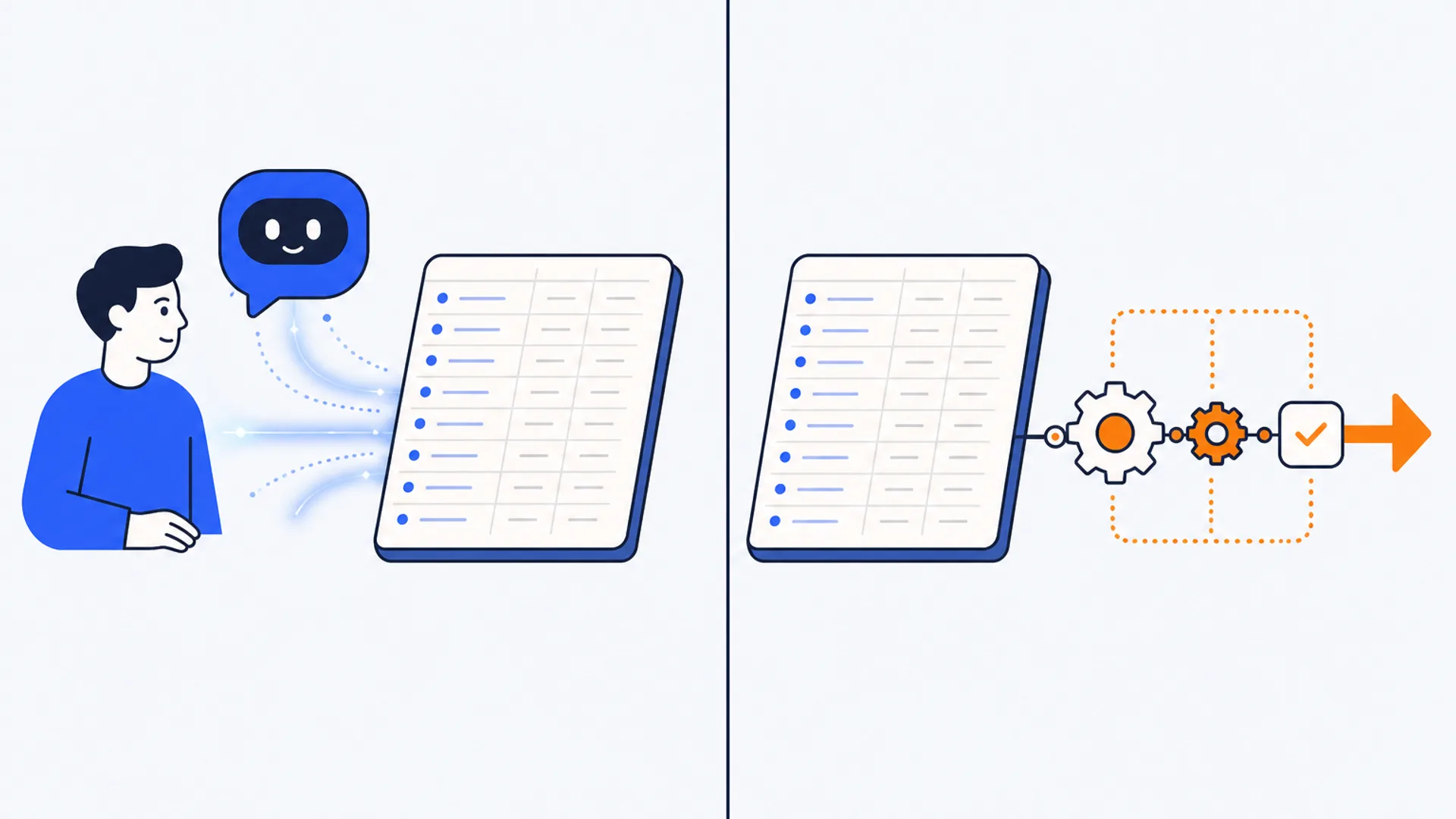
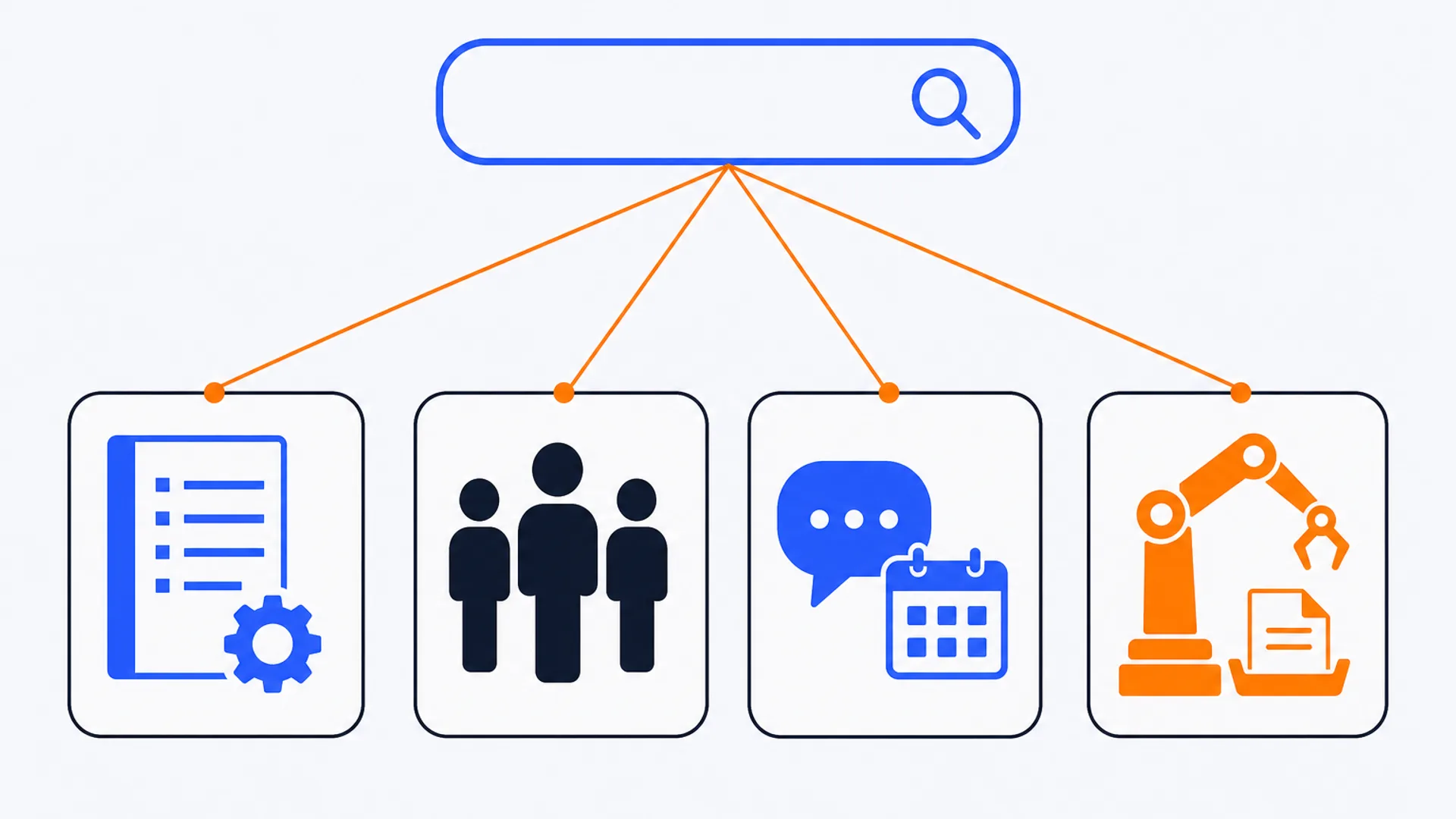
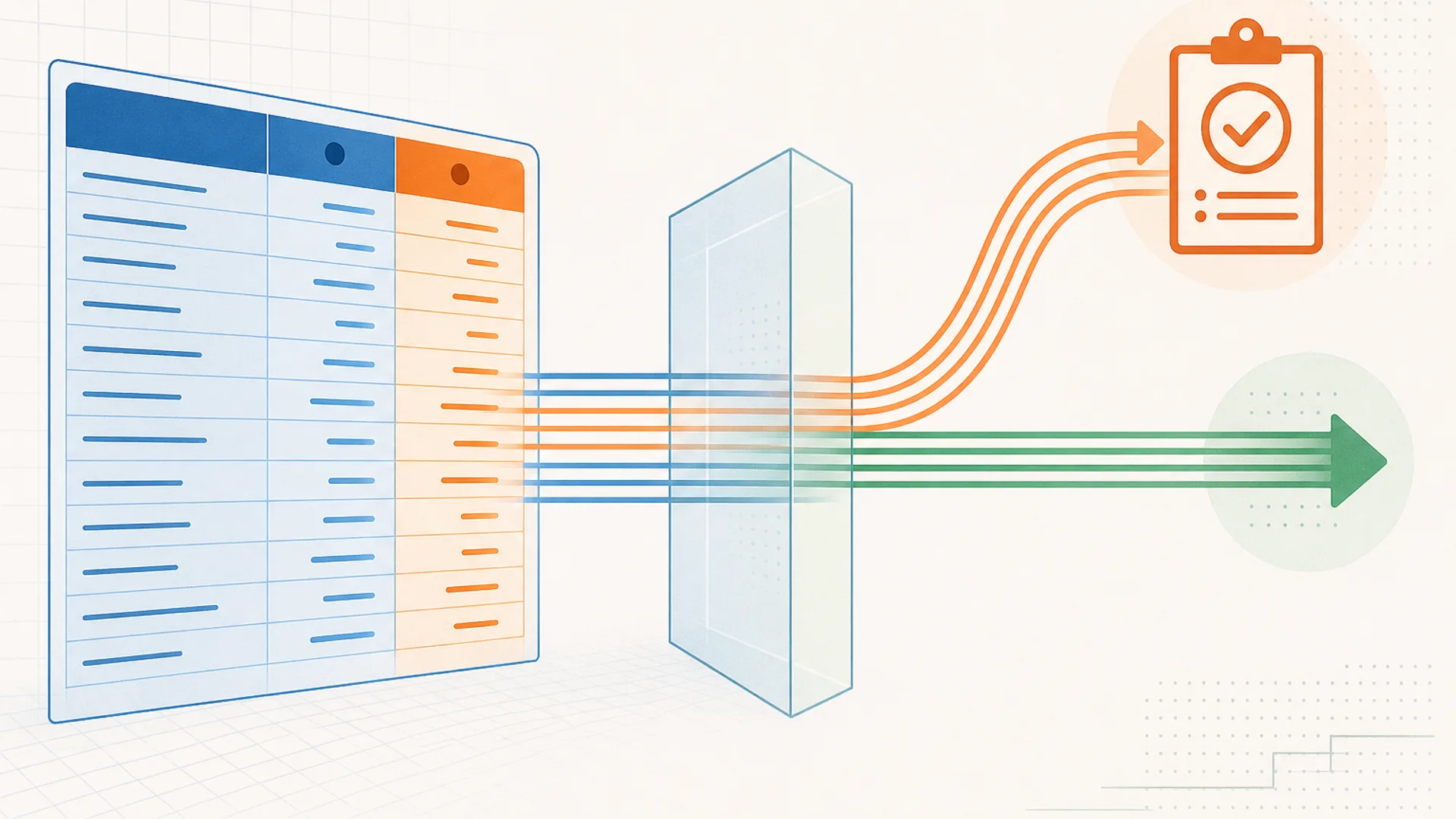
Search "AI bookkeeping assistant" and most of what comes back is self-serve software with an AI feature added to the name. That is not a complaint about marketing copy so much as a useful fact: an assistant, in the plain sense of the word, does some of the work for you. Read the vendor documentation across the 20 tools in our core ledger and bookkeeping catalog and only a handful actually describe a person checking, approving, or doing part of the job. The other software runs the books entirely on its own and simply calls that an assistant.
That split is the organizing idea for this list. For the wider picture of where bookkeeping time goes and which category of tool shrinks each part, the hub guide, AI bookkeeping tools compared, covers the workflow in full. This piece narrows to one question: when a tool says it assists with bookkeeping, how much of that assistance actually comes from a human, and how much is just automation with a friendly name?
How this list sorts
Every claim below comes from what each vendor publishes about its own product, checked against the tool pages in our catalog. We read the documentation for all 20 tools with one question in mind: does the vendor describe a person doing or checking part of the work, or is the product fully autonomous once it is set up?
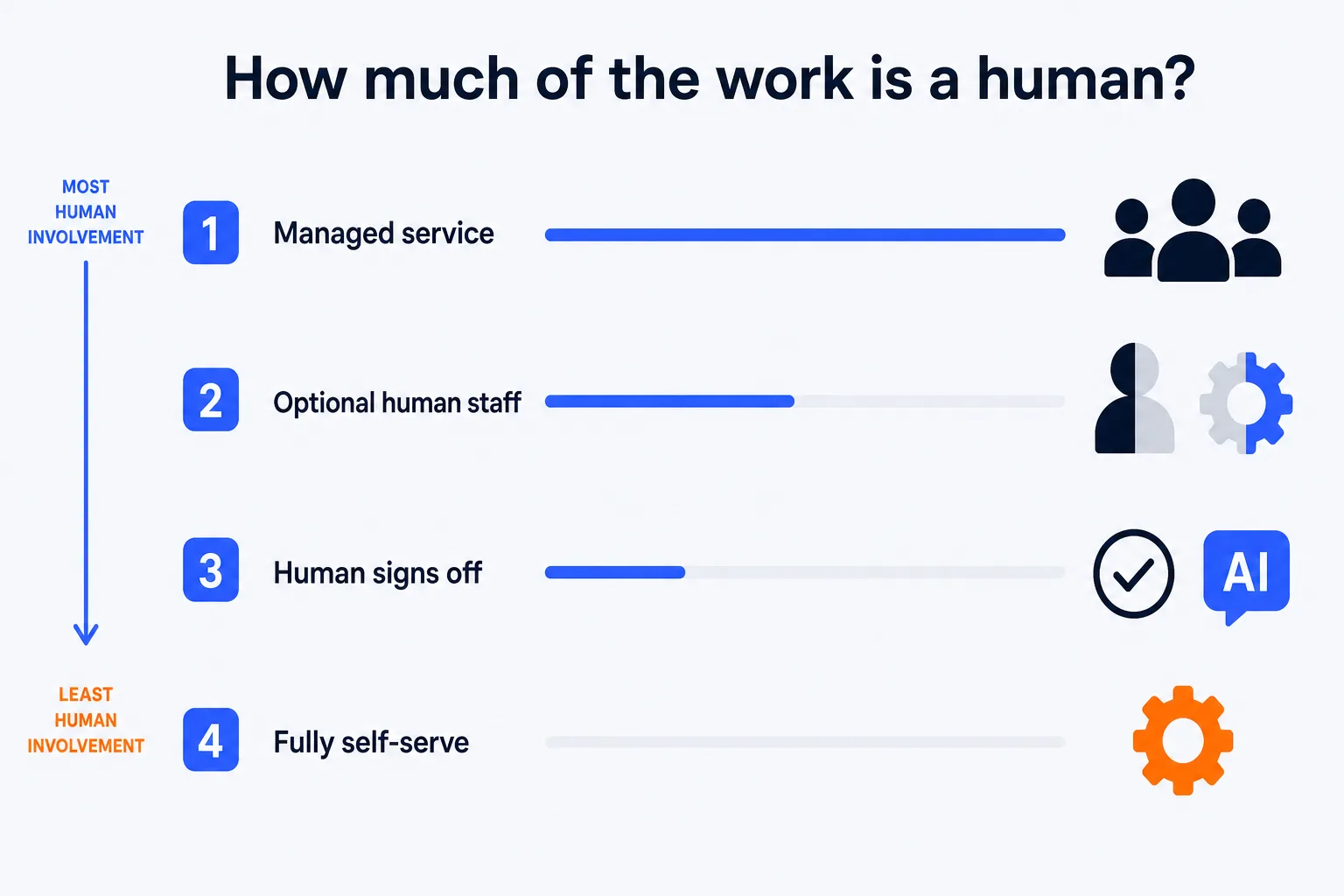
Four groups fell out of that reading, running from the most human involvement to the least:
- A managed service with a dedicated human team included in the price.
- Software built for firms, with human staff available as an optional add-on.
- Software where the AI drafts the work and a person, usually your own accountant, has to approve it before it posts.
- Self-serve software that runs the categorization and reconciliation on its own, with no human checkpoint described anywhere in the documentation.
The fuller pricing breakdown across all 20 tools, sorted by how the pricing model itself changes the real cost for a firm, lives in Best AI bookkeeping software in 2026. This list stays on the assistant question specifically.
Managed service: Zeni bundles the AI with a full human team
Zeni sits furthest along the human end of the scale. It is not sold as software you operate; it is a managed finance service for US startups, and every plan pairs the AI categorization with a dedicated team of a controller, a bookkeeping manager, and an analyst. The AI does the transaction matching and categorization day to day, and the human team reviews it, handles bill pay and reimbursements, and produces the reporting.
Pricing reflects that: plans start around $494 a month for pre-revenue companies, rising to about $719 for the Growth tier, well above a typical software subscription because the price includes the labor. Zeni works exclusively with QuickBooks Online and only for US-based companies, so a business on Xero would need to migrate first. CFO services, tax filing, and payroll are separate paid add-ons on top of the core plan.
Botkeeper: AI does the coding, human staff are there when a firm needs them
Botkeeper sits a step down from a fully managed service. It is built for accounting firms rather than the businesses whose books are being kept, and it automates transaction categorization, bank reconciliation, journal entries, and month-end review across a firm's client base. High-confidence entries post straight to the ledger; anything the model is less sure about gets surfaced for a person to check.
What makes it an assistant rather than a plain automation tool is the optional layer on top: a firm can call on Botkeeper's own support staff for extra hands during a busy season, rather than hiring and training someone in-house. That is a choice, not a requirement, which is why Botkeeper sits below Zeni on this list; the human piece is available, not included by default. Pricing runs per license per month and drops with volume, from around $134 each at one to four licenses down to about $53 at 25 or more, and it connects to QuickBooks Online and Xero.
Truewind and Booke: the AI drafts, a person signs off
Two tools in the catalog document a human checkpoint built directly into the workflow, without offering a vendor-supplied team the way Zeni and Botkeeper do. The person doing the checking is your own accountant or bookkeeper, not someone the vendor employs.
Truewind turns bank statements and workpapers into general-ledger-ready journal entries and reconciliations, aimed at US startups and the client advisory teams that serve them. Its own documentation describes the model plainly: AI drafts the entries, and an accountant reviews, adjusts, and approves before anything posts to the ledger. It sits on top of QuickBooks Online, Sage Intacct, NetSuite, or Xero rather than replacing any of them, and pricing is quoted by sales call.
Booke works the same way at a smaller scale. It connects to QuickBooks, Xero, or Zoho Books and runs daily categorization, document matching, and reconciliation, plus chasing clients for missing paperwork. Anything it is not confident about gets surfaced for a human to confirm rather than posted automatically. Booke's self-serve plan runs about $129 per business per month, with a custom quote for firms managing several client files at once.
Self-serve AI that runs the books without a documented human step
The rest of the catalog, including some of the most capable AI-native ledgers, describes no human checkpoint at all. That is not a knock on the software; a fully autonomous ledger is exactly what a lot of small businesses want. It just means the word assistant, when applied to these tools, describes the AI feature rather than any person behind it.
Digits is the clearest case. Its own documentation says the Autonomous General Ledger "runs with very little human touch," now a standalone platform after evolving away from an early QuickBooks overlay. It starts at $65 a month for a single business, with firm plans priced per client for practices that want wholesale rates.
QuickBooks Online covers the full bookkeeping cycle and includes Intuit Assist at no extra cost. Despite the name, Intuit Assist is an AI layer inside QuickBooks: it handles categorization, receipt data capture, and plain-language questions about the books, with no separate human review step documented anywhere in the product. Xero runs the same kind of self-serve categorization and reconciliation, and Puzzle, an AI-first ledger built for US startups, does the same with a free starting tier and pricing that scales with transaction volume rather than seats.
None of that is a mark against these four. If a business or firm wants a faster ledger and is comfortable being the one checking the work, self-serve is the right category. The point is only that "assistant" here means a feature, not a colleague.
Does an AI bookkeeping assistant also handle taxes?
Mostly not, and that is worth knowing before assuming one purchase covers both jobs. Bookkeeping and tax are separate disciplines with separate software categories in this catalog, and most of the tools above stop at the books. The one exception among the tools covered here is Zeni, where CFO services, tax filing, and payroll are available as add-ons layered on top of the core bookkeeping plan, priced and sold separately rather than bundled in.
If a firm's real question is which AI tools help with tax preparation and research rather than day-to-day bookkeeping, that is a different shortlist; the tools built for that job are covered in AI tools for tax and audit.
How much of the job do you actually want to hand off?
The right pick depends less on features than on how much of the work you want off your desk entirely, versus how much you want to keep an eye on.
If the goal is to stop touching the books altogether, a managed service like Zeni is the honest fit, at a price that reflects the labor included. If you run a firm and want to add capacity without hiring one bookkeeper per new client, Botkeeper's optional staff layer solves a different problem: firm-level automation with backup support when volume spikes. If you want AI to do the drafting but you are not ready to remove yourself from the approval step, Truewind or Booke keep that checkpoint in place. And if you simply want a ledger that categorizes and reconciles well on its own, the self-serve group, Digits, QuickBooks Online, Xero, or Puzzle, does that job without adding a service layer or a service price.
If you would rather answer a few questions than work through this list by hand, the matchmaker quiz narrows the tools we track down to the ones that fit your firm size, ledger, and how much of the work you want to hand off.
Common questions
What is the best AI bookkeeping assistant?
There is no single best, because "assistant" covers four different products here. For a business that wants bookkeeping fully outsourced, Zeni pairs AI with a human finance team. For a firm scaling client capacity, Botkeeper adds optional human staff on top of its automation. For a business or firm that wants AI drafts with a person still approving them, Truewind or Booke. For a business that wants a self-serve ledger with no service layer, Digits, QuickBooks Online, Xero, or Puzzle.
Is an AI bookkeeping assistant actually a human, or just software?
It depends on the tool, and the name alone will not tell you. Only Zeni and Botkeeper document an actual person doing part of the work, a dedicated team for Zeni, optional support staff for Botkeeper. Truewind and Booke have a human checkpoint, but that person is your own accountant or bookkeeper, not someone the vendor supplies. The rest, including some tools that market themselves heavily around AI, describe no human step at all.
How much does an AI bookkeeping assistant cost?
It ranges widely because the category spans software and managed services. Self-serve ledgers run from free (Puzzle's starter tier, Intuit Assist inside QuickBooks) to around $130 a month per business. Firm-facing automation like Botkeeper prices per license, from roughly $53 to $134 depending on volume. A fully managed service like Zeni starts around $494 a month because the price includes a human team, not just software.
Can an AI bookkeeping assistant replace a bookkeeper?
Only the managed-service tier comes close, and even then a firm's own accountant typically still handles tax filing, advisory conversations, and unusual transactions unless those are purchased separately. For the software-only tiers, a person still sets up the chart of accounts, makes materiality calls, and reviews anything the AI flags. The realistic gain across all four groups is fewer hours on repetitive data entry, not a replaced role.
Does an AI bookkeeping assistant work with QuickBooks or Xero?
Most do. Truewind, Booke, and Intuit Assist work inside or on top of QuickBooks Online, Xero, or both. Botkeeper connects to QuickBooks Online and Xero as well. Zeni is the exception: it works exclusively with QuickBooks Online, so a business on Xero would need to migrate before using it. Digits and Puzzle are standalone ledgers built to replace QuickBooks rather than sit on top of it.